
If You're Exhausted But Your Body Won't Shut Off at Night, Read This

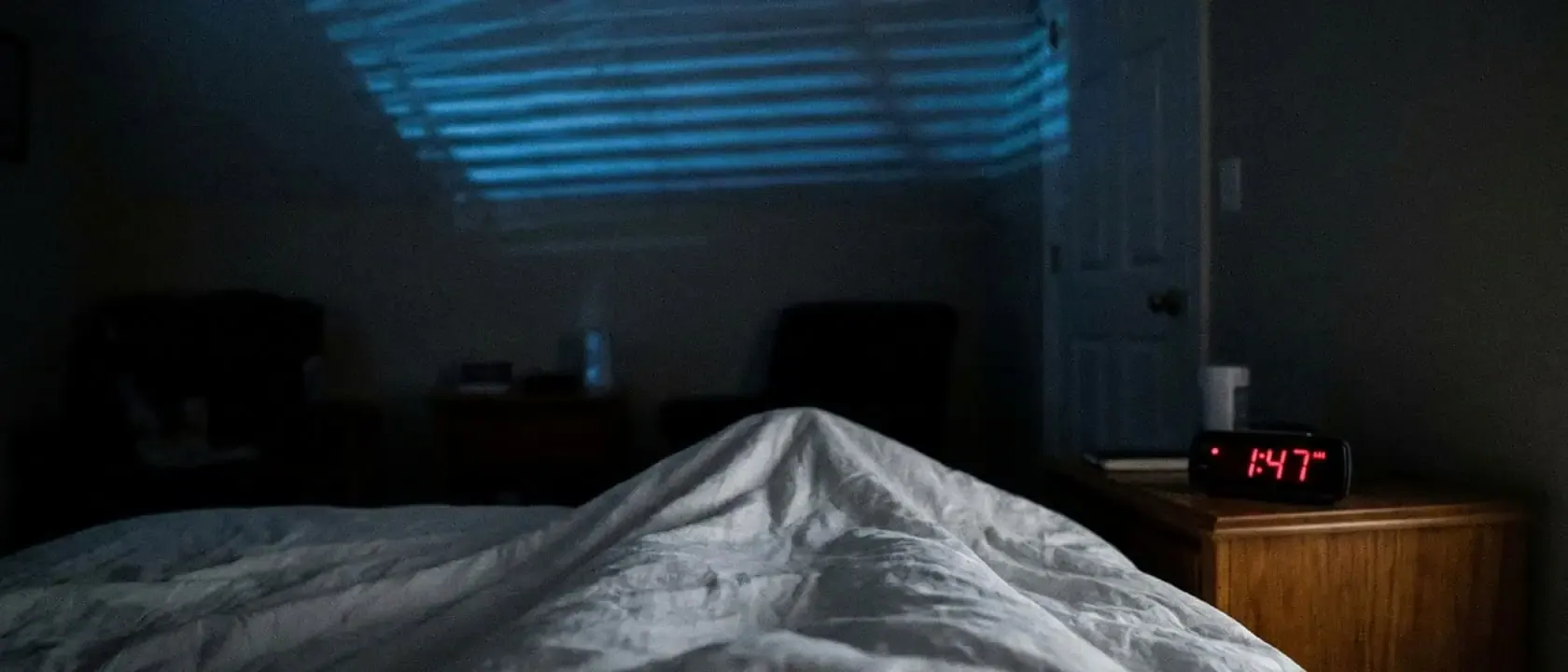
You already know what's coming tonight.
You'll crawl into bed exhausted.
Eyes burning. Body heavy.
And the second the lights go out, your brain will start performing.
There's a reason this keeps happening. And it's not what you think.
Here's what's actually going on.
You're Not Sleeping. You're Pretending To.
You've done everything right.
Melatonin at 9:30. Phone on the nightstand. Lights off.
But you're still lying there at 11.
Your jaw is clenched.
Your shoulders are up near your ears.
Your legs won't stop moving.
And your brain?
Running tomorrow's to-do list.
Replaying a conversation from three days ago.
Worrying about your mother.
Calculating whether you can afford the car repair.
You check the clock.
1:47 AM.
You tell yourself to stop checking.
2:23 AM.
By morning, you've been in bed for eight hours.
You've rested for maybe two.
So you pour more coffee. Push through another day. Snap at your partner over nothing. Forget simple things.

And when someone asks how you slept?
"Fine."
Sound familiar?
Here's the thing.
You've already tried the list:
Melatonin.
CBD.
Magnesium.
White noise.
And that app with the breathing exercises. Maybe a prescription.
None of it stuck.
And every time something doesn't work, that voice gets louder:
Maybe this is just how life feels now.
But here's what nobody told you.
The problem isn't your sleep.
It's what's happening in your nervous system before sleep even gets a chance to start.
Why Nothing You've Tried Has Worked
Your body runs on two modes.
Alert mode. Your sympathetic nervous system. It keeps you scanning, reacting, bracing. The system that kept your ancestors alive by staying ready for danger.
Rest mode. Your parasympathetic nervous system. It tells your body the coast is clear. Safe to power down. Safe to sleep.
For most of human history, the switch between these two happened automatically.
Sun goes down.
World gets quiet.
Body shifts into rest.
Modern life broke that switch.
Screens until midnight. Work emails at 10 PM. News designed to keep you agitated.
Your alert system stays on because the world never stops giving it reasons to stay on.
So you get into bed.
Your brain wants to sleep.
But your nervous system is still standing guard.
Still scanning.
Still bracing.
Doctors call it hyperarousal.
You probably just call it "I can't turn my brain off."
And that's exactly why most sleep products don't work.

They target the wrong thing.
Melatonin tells your brain it's nighttime.
Your nervous system doesn't care what time it is. It cares whether you're safe.
Sleep meds sedate you.
But it's not real restorative sleep. And the dependency risk is real.
Breathing apps target your conscious mind. But this isn't a conscious problem.
You can't think your way into calm.
What actually works is a physical signal.
Not a chemical one. But a physical one that tells your nervous system it's safe to stand down.
More on that in a second.
But first. The part nobody talks about.
What Actually Works (And Why)
Deep Pressure Stimulation.
Steady, even weight across your body.
It triggers pressure receptors in your skin. Those receptors send signals through the vagus nerve to your brainstem.
What happens next is measurable.
Cortisol drops.
Heart rate slows.
Breathing deepens.
Your alert system releases its grip. Your rest system takes over.
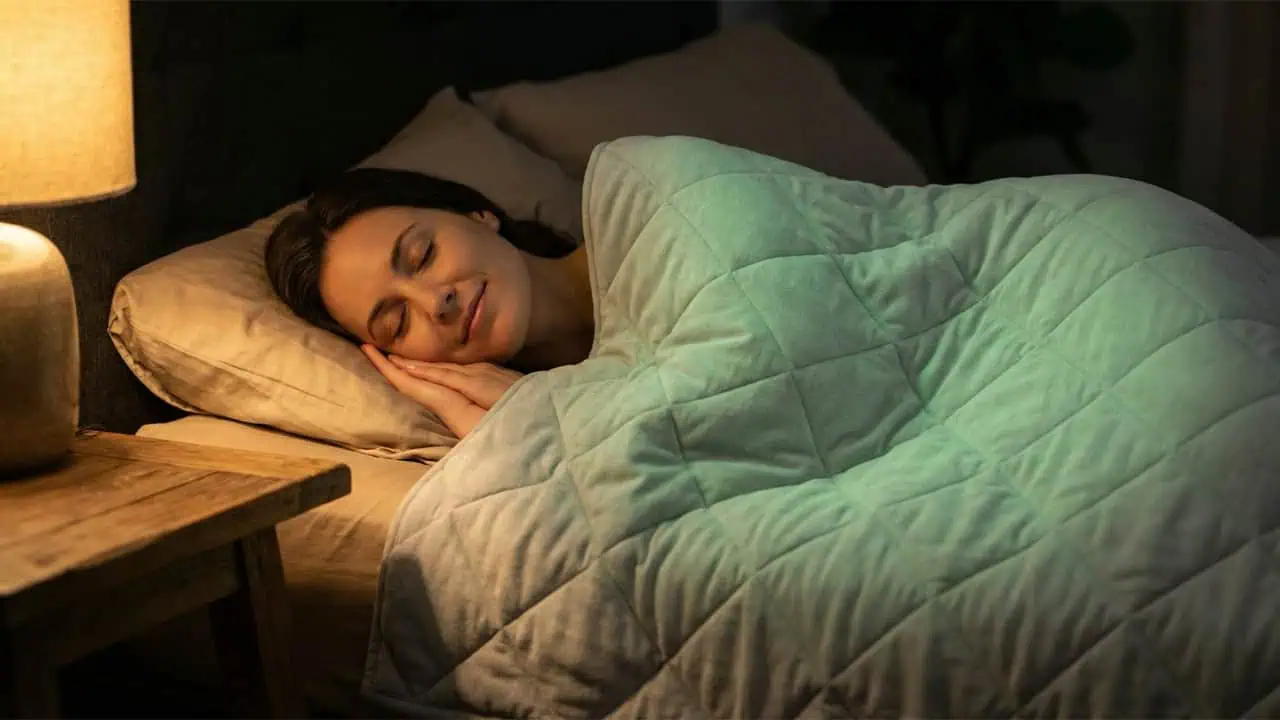
This isn't new.
Occupational therapists and psychiatric clinics have used deep pressure for decades.
For anxiety. PTSD. Sensory overload.
Dr. Mats Adler, a consultant psychiatrist at the Karolinska Institutet in Stockholm, has studied this directly.
His explanation:
The weighted pressure stimulates touch and the sense of muscles and joints. Similar to acupressure and massage. It increases parasympathetic arousal while reducing sympathetic arousal.
In plain language:
The pressure tells your alert system to quiet down and your rest system to take over.
That's what a good weighted blanket does.
The keyword is good.
The #1 Reason People Give Up on Weighted Blankets
Most weighted blankets are terrible.
If you've tried one and given up, this is probably why.
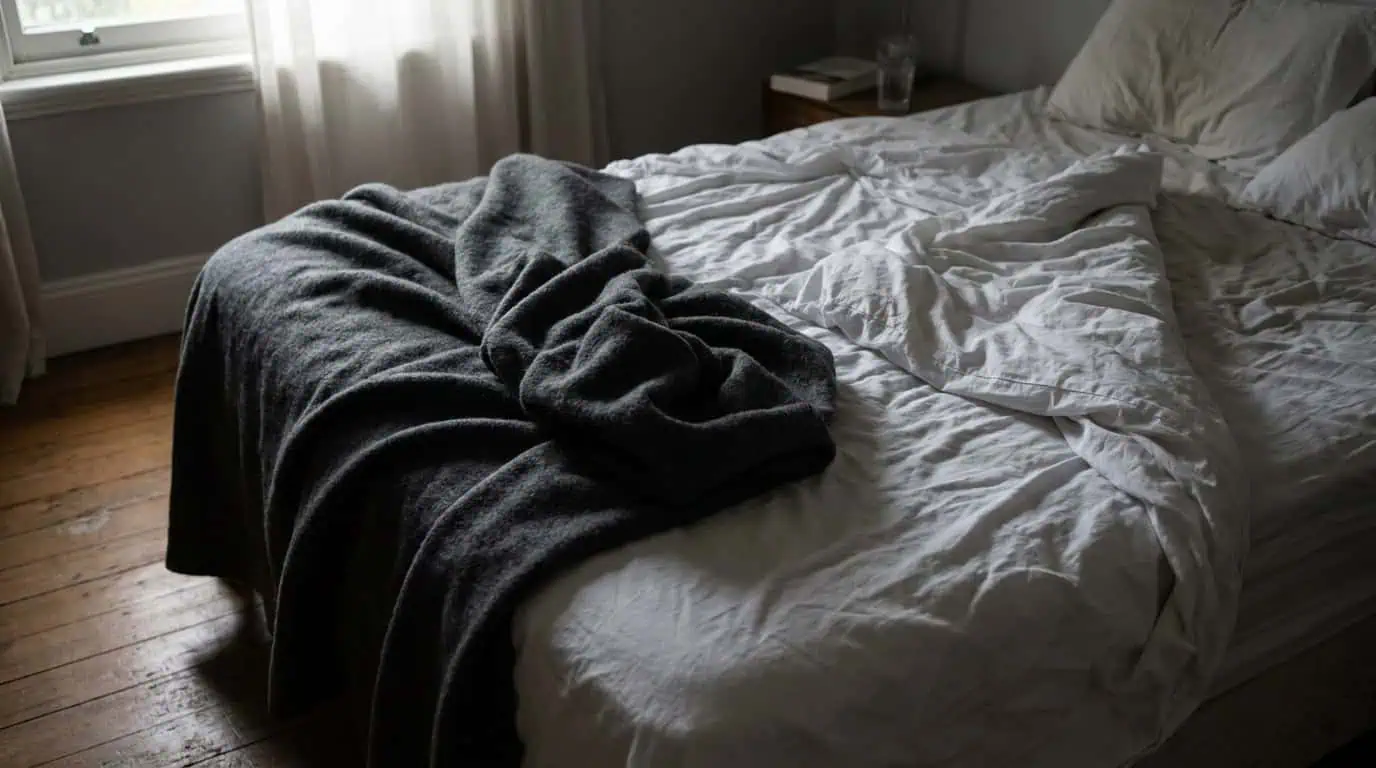
Problem #1: They're Sweat Traps
Most blankets use plastic pellets. Plastic traps heat. Within an hour, you're soaked.
You kick the blanket off. You wake up. The whole point is defeated.
One of our readers said it perfectly:
"I wanted it to work so badly. But I woke up completely drenched. Even the sheets were wet."
We've heard that story dozens of times.
People buy a cheap blanket off Amazon, overheat, and conclude that weighted blankets "don't work."
They're wrong. The blanket was wrong.
Problem #2: The Weight Shifts
Budget blankets use wide stitch pockets. Five inches or more.
The beads pool in the corners. All the weight bunches around your legs. Your hips get crushed while your chest feels like a regular sheet.
That defeats the entire purpose.
Problem #3: You Can't Wash Them
You sleep under something every night and you can't put it in the machine.
That's not a product for real life.
These three problems are why most weighted blankets end up in a closet within a month.
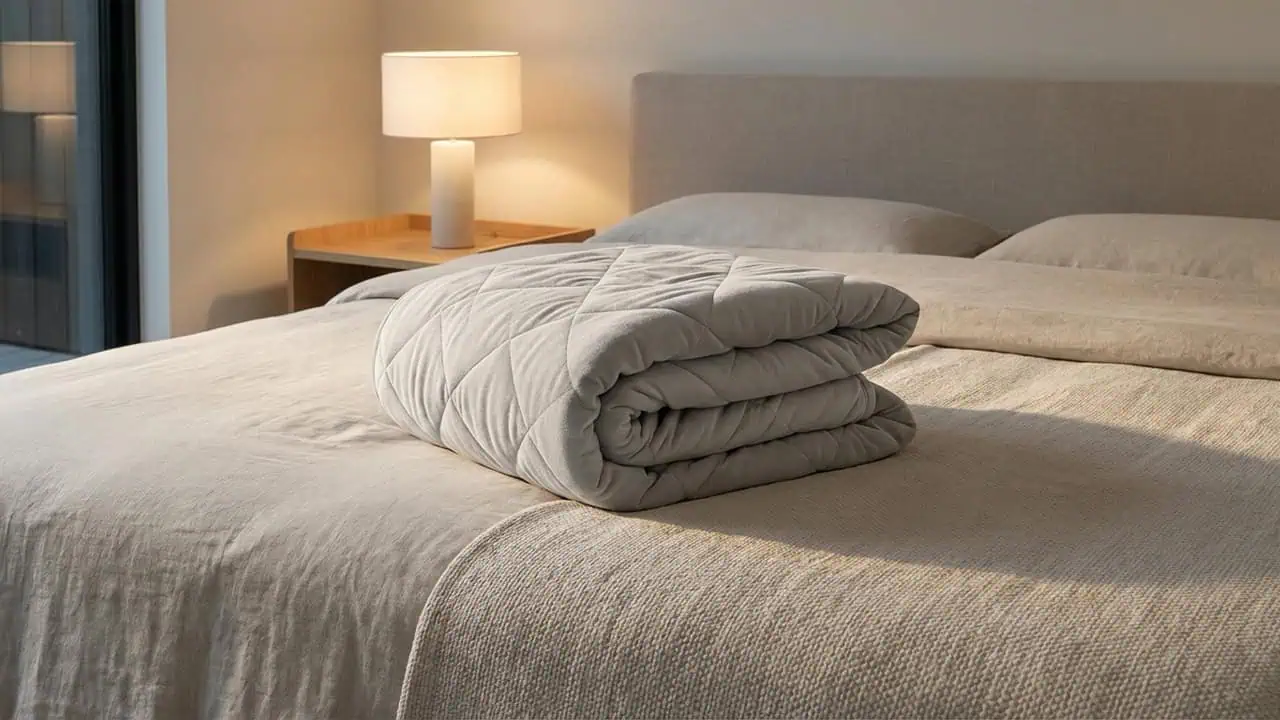
The One We Keep Coming Back To
BareEarth is the one we keep recommending.
Not because of marketing.
Because they solved all three problems above.
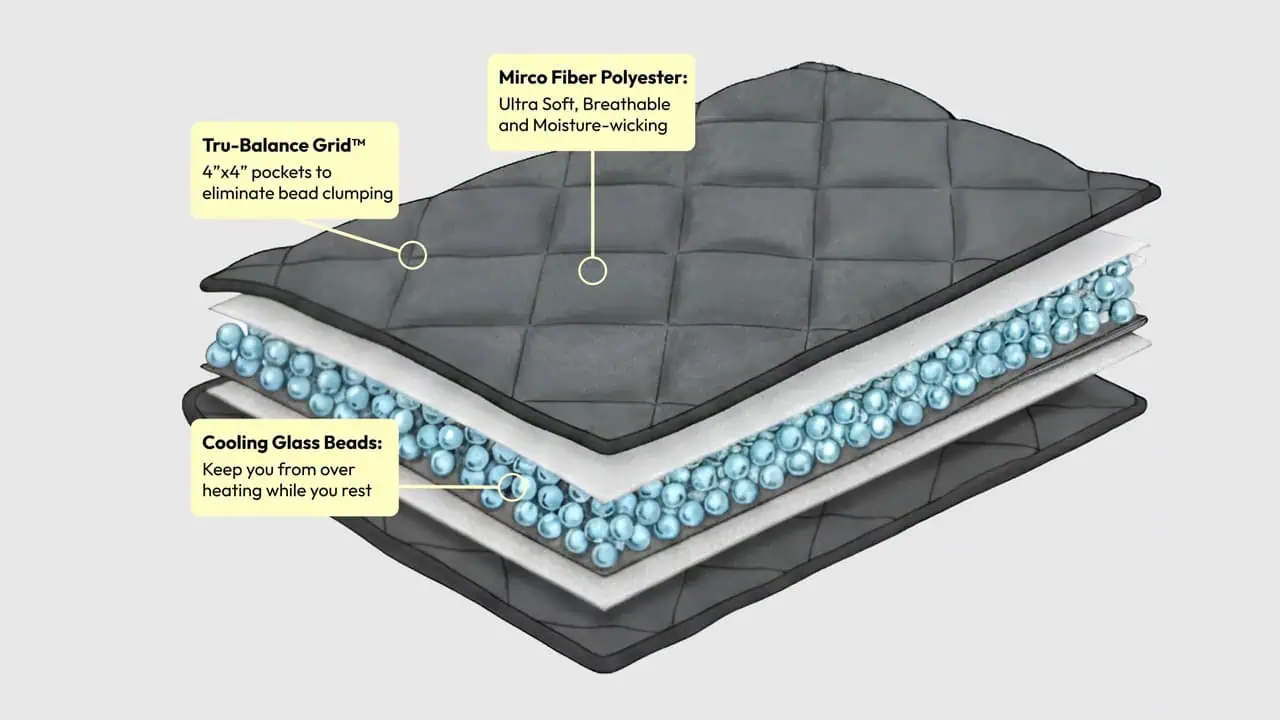
On heat: Glass microbeads instead of plastic pellets. Glass conducts heat away from your body instead of trapping it. Paired with moisture-wicking, breathable fabric.
Hot sleepers tell us this one stays on the bed all night.
On weight distribution: A stitched 4x4-inch pocket grid called Tru-Balance. Keeps every bead locked in place.
No pooling. No clumping. No heavy corners and empty middles.
Even pressure from edge to edge. Exactly what the research says Deep Pressure Stimulation requires.
On washability: The whole blanket goes in the machine. Not just a cover. The whole thing.
The numbers: 217,000+ sold. 27,000+ five-star reviews. 90-day money-back guarantee.
But here's what convinced us more than any stat.
What real buyers actually say:
— Jessica
— Beth M.
— Dave H.
— Dennis J.
And an honest first impression:
— Susan
BareEarth includes a 90-day money-back guarantee.
Three full months to try it in your own bed. If it doesn't change your sleep, send it back.
The Bottom Line
If you've been lying awake. Exhausted but wired. Cycling through solutions that target your brain while your nervous system stays locked in alert mode.
This is a different approach.
Not a pill.
No dependency.
No grogginess.
No side effects.
A physical signal that tells your body it's safe to let go.
The same mechanism therapists have used for decades.
Built into something you put on your bed tonight.
You might be wondering:
Is it worth it?
Based on what we've heard from readers, and what the research shows?
Yes.
But you've got 90 days to decide for yourself.
Zero risk.